
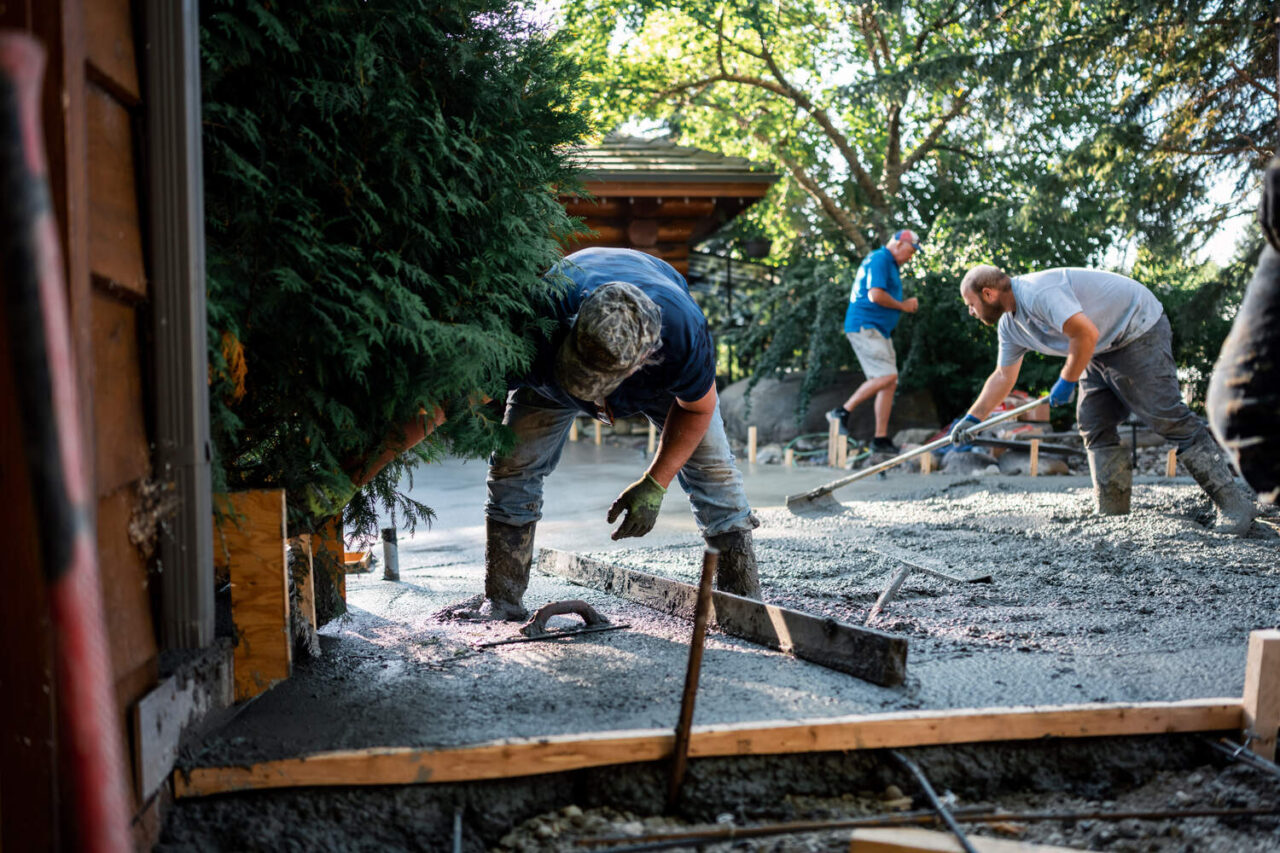
If you’re planning a concrete driveway installation in Minnesota, the biggest budgeting mistake is treating “price per square foot” like an absolute price. Understanding concrete driveway cost requires looking at multiple separate components: the base installed price for your chosen finish and the add-ons driven by your specific site conditions and requirements (think reinforcing, excavation, unique drainage, etc.).
Now before we dive in, we want to make it clear that these numbers are simply estimates to help you get an idea of how much a concrete driveway will cost. Every project is different and sometimes the price can be lower or higher depending on the situation. If you want to get an exact estimate for your project, you will need to contact a concrete driveway contractor to come out to measure the space and put together a quote.
How Much Does a Concrete Driveway Cost?
The general cost range for a professionally installed concrete driveway costs between $8 and $28+ per sq ft all-in, depending on size, finish selection, site preparation needs, and project-specific factors. However, this wide range reflects the reality that every driveway project is unique. A plain broom-finish driveway on an accessible lot with no existing demolition might cost $8 to $12 per sq ft, while a decorative stamped concrete driveway requiring extensive grading, reinforcement, and old driveway removal can easily reach $18 to $28 per sq ft (or higher if you’re looking at some super elaborate designs).
For most Minnesota homeowners who want a standard two car concrete driveway, you can expect bids to range from $5,100 to $7,700 or $8 to $12 per sq ft.
The most accurate way to estimate the cost of your concrete driveway is to start with a base price tier that matches your desired finish, then add costs for your specific site conditions and upgrades. Most homeowners should consider the following:
- Base price with standard broom finish ($8 to $12 per sq ft)
- Unique finish upgrades (+$3 to $8 per sq ft)
- Removal of old driveway (+$1 to $5 per sq ft)
- Additional excavation (highly dependent on site conditions)
- Base layer (should be included in the base price)
- Reinforcing (typically recommended for all driveways, but if it’s not included, could add $1 to $3 per sq ft)
- Extra thickness (recommended for driveways with heavy trucks, trailers, or equipment – add 25% to 50%)
- Unique coloring or staining (+$3 to $8)
While these items help build an estimate, it helps to break down the cost step by step, so you can accurately budget and evaluate contractor bids with confidence.
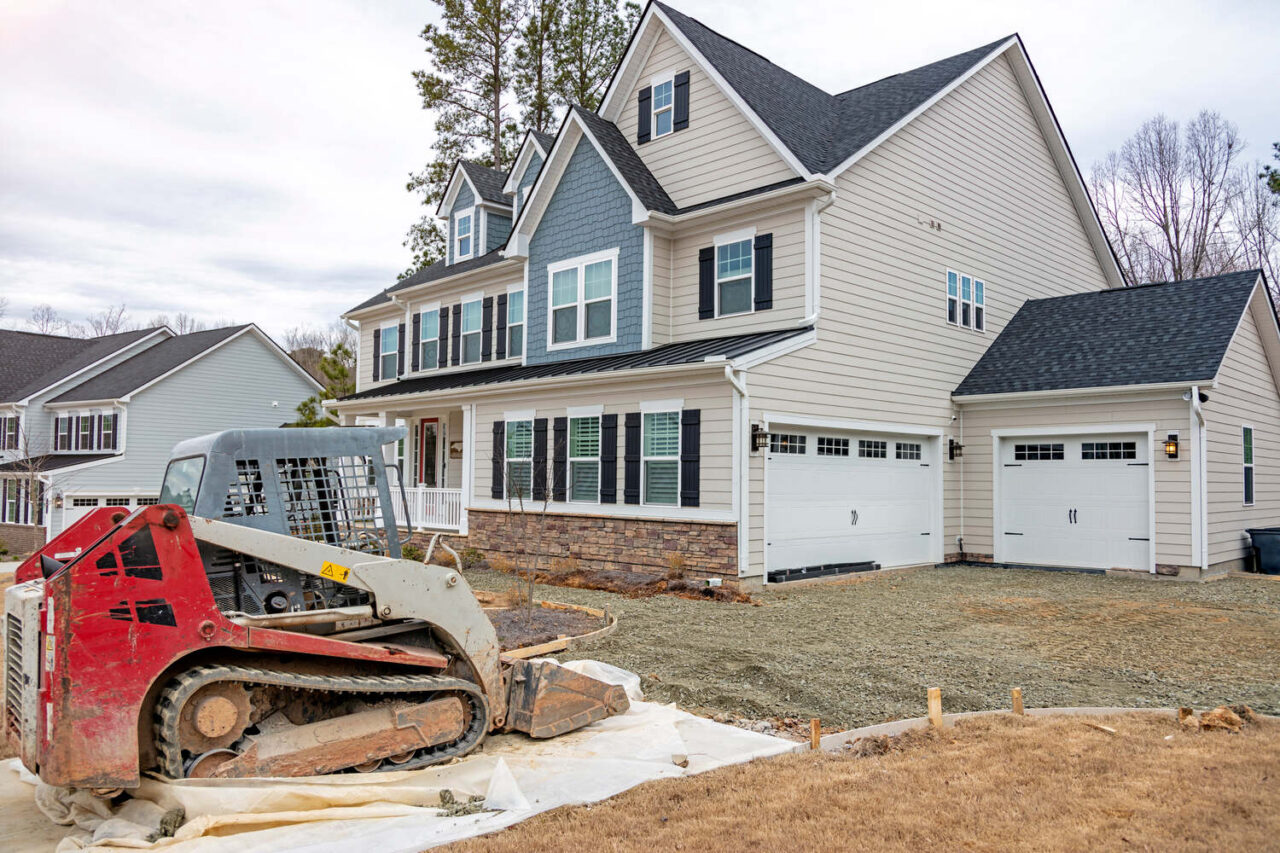
Step 1: Calculate Your Driveway Square Footage
Before you can estimate costs, you need to know your driveway’s size. The calculation is straightforward:
Width (feet) × Length (feet) = Square Feet
Common driveway sizes in Minnesota include:
- Single-car driveway: 12′ × 24′ = 288 square feet
- Standard two-car driveway: 16′ × 40′ = 640 square feet
- Wider two-car driveway: 20′ × 40′ = 800 square feet
- Large two-car with turnaround: 24′ × 44′ = 1,056 square feet
If your driveway has an irregular shape, try to break it into rectangles, calculate each section separately, then add them together. For curved or circular features, measure the widest points and multiply to get an approximate square footage. The more accurate your measurements are, the more accurate your estimates will be to the actual cost.
Step 2: Start with Base Installed Pricing by Finish
These price ranges represent a “typical driveway build” on a normal site with standard access, standard 4-inch thickness, normal base preparation, no major drainage overhaul, and no extensive demolition complications. Think of these as your starting point before site-specific factors come into play.
Base Tier A: Plain Broom Finish (Functional and Clean)
Typical base installed price: $8 to $12 per sq ft
This is the classic gray concrete driveway with standard reinforcement and a broom-textured finish for traction. It’s the most economical option and often provides the best value because you’re investing primarily in quality materials and proper installation rather than decorative appearance. Standard broom-finish concrete delivers excellent longevity and requires minimal driveway maintenance, making it ideal for homeowners who prioritize function and durability over aesthetics.
For a 640-square-foot two-car driveway, the base cost ranges from $5,100 to $7,700 before any add-ons.
Base Tier B: Light Decorative Upgrades
Typical base installed price: $12 to $15 per sq ft
This tier includes finishes that add visual interest without the complexity of full stamped patterns. Options include exposed aggregate (which reveals decorative stones within the mix), basic integral color throughout the concrete, acid staining that creates variegated earth tones, or salt-finish textures.
The most popular finishing add-ons we see in Minnesota is integral coloring and maybe a light texture. Since winter takes up what feels like a majority of the year, we encourage homeowners to consider snow removal and de-icing which is always hard on decorative finishes. This makes them a less popular option for driveways. But, if you’re looking for something more than a grey surface, don’t let this discourage you. Just expect you might need to invest a little more in maintenance and upkeep.
For a 640-square-foot two-car driveway with light decorative upgrades, the base cost ranges from $7,700 to $9,600 before any additional add-ons.
Base Tier C: Decorative and Stamped Concrete
Typical base installed price: $15 to $18 per sq ft
Stamped concrete replicates the appearance of brick, stone, cobblestone, slate, or tile at a fraction of the cost of those materials. The process involves pressing textured mats into freshly poured concrete before it fully sets, creating realistic patterns and textures. Color is added through integral pigments, surface hardeners, or stains to enhance the realistic effect. Popular patterns for Minnesota driveways include ashlar slate, various stone finishes, European cobblestone, and weathered wood plank designs.
Stamped concrete requires precise timing and skilled finishing work, as the concrete must be at exactly the right consistency for stamping. This additional complexity and labor expertise justifies the higher price point while delivering a high-end appearance that significantly enhances curb appeal.
For a 640-square-foot two-car driveway, the base cost ranges from $9,600 to $11,500 before additional add-ons.
Base Tier D: Premium Custom Decorative
Typical base installed price: $18 to $25+ per sq ft
Premium decorative concrete combines multiple techniques to create truly distinctive driveways. This might include stamped patterns with hand-applied color accents in multiple tones, decorative borders in contrasting colors or patterns, saw-cut designs creating geometric patterns, custom scoring that mimics tile or stone layouts, or artistic engraving. These projects require significant planning, skilled craftsmanship, and extended installation time, but they transform your driveway into a landscape focal point that sure to wow the neighbors.
For a 640-square-foot two-car driveway, the base cost ranges from $11,500 to $16,000 or more before any additional add-ons.
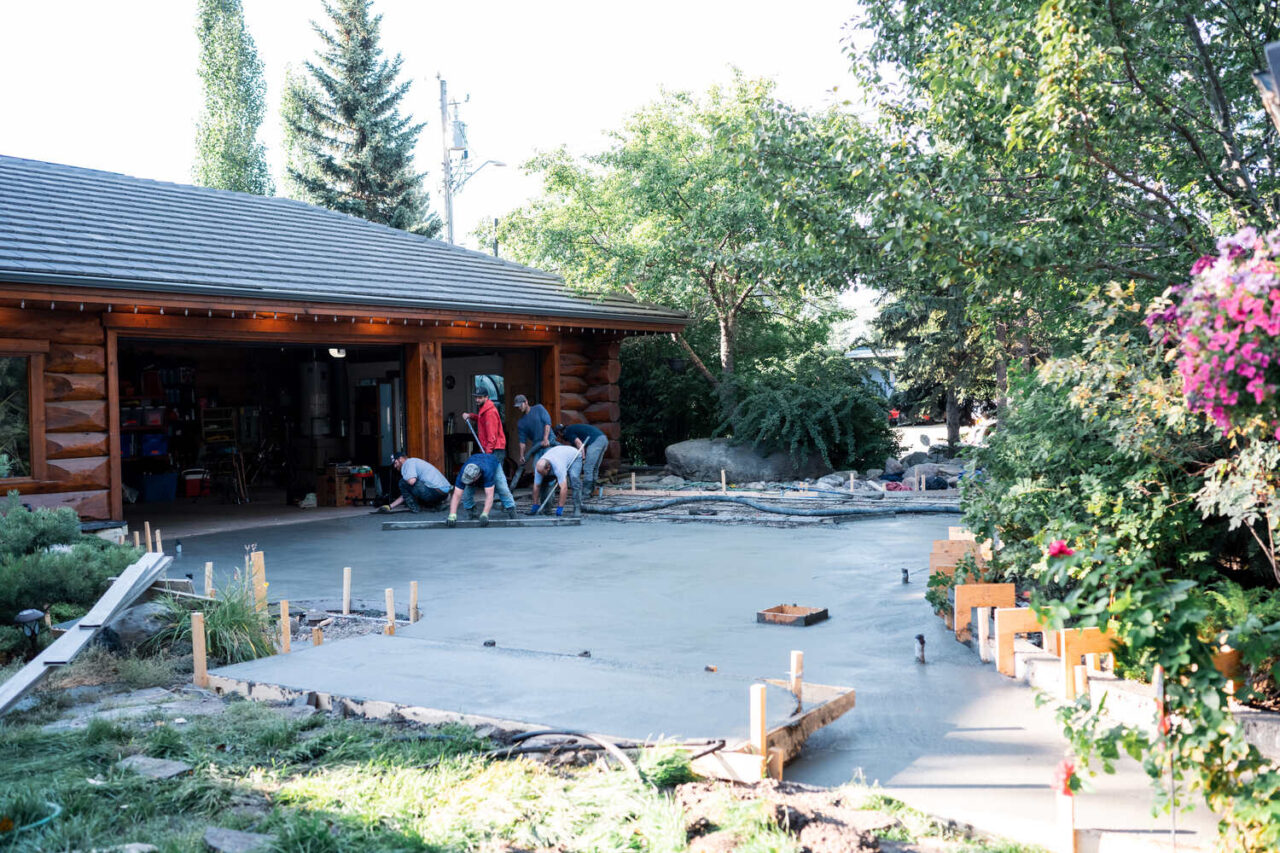
Step 3: Add-Ons that Can Raise the Price for Any Finish
This is the part most pricing guides ignore, and it’s why two homeowners with the same square footage and finish choice can receive dramatically different quotes. These site-specific factors and upgrades apply regardless of whether you choose plain or decorative concrete, and they can add thousands of dollars to your project cost.
Removal and Disposal (Replacing an Existing Driveway)
Typical cost: $1 to $4 per sq ft
If you’re replacing an old driveway, removal costs represent a significant additional expense. Concrete removal is more expensive than asphalt removal due to the material’s density and the labor required to break it up. Contractors often use jackhammers or specialized concrete-breaking equipment, then load and haul the debris to recycling facilities.
Removal costs vary based on several factors. Thicker concrete, reinforced concrete with heavy rebar, or driveways with limited access requiring hand-loading can push costs toward (or sometimes past) the higher end of the range. Some contractors offer slightly lower rates if they can recycle the old concrete for use as road base or fill material elsewhere, reducing their disposal fees.
For a 640-square-foot driveway removal, expect to add $640 to $2,560 to your project cost.
Grading, Drainage Fixes, and Heavy Site Preparation
Typical add-on: $1 to $6 per sq ft
Proper grading is essential for driveway longevity and performance. Your driveway must slope away from your home and garage to prevent water from pooling or flowing toward structures. Sites with challenging terrain, significant elevation changes, or poor existing drainage require more extensive grading work.
Minnesota’s clay-heavy soils in many areas may need additional excavation and replacement with properly compacted gravel to create a stable base. This base layer, typically 4 to 6 inches of crushed stone or road base, prevents settling and provides essential drainage beneath the concrete. Sites with soft soils, high water tables, or drainage problems may require even deeper excavation and more extensive base preparation.
Major slope corrections, French drain installations, or significant earthwork to create proper drainage can push grading costs to $5 or $6 per sq ft. However, this investment prevents far more expensive problems down the road, including cracking, settling, and water damage to your home’s foundation.
For a 640-square-foot driveway, grading and site preparation can add $640 to $3,840 to your project cost, depending on site conditions.
Thickness Upgrades for Heavy Loads
Most residential driveways use standard 4-inch thickness with rebar or grid reinforcement, which adequately supports passenger vehicles, SUVs, and light trucks. However, if you regularly park heavy trucks, RVs, boats on trailers, or commercial equipment, you need thicker concrete to handle the load without cracking or settling.
- 5-inch slab: Often adds about 20 to 25 percent to the concrete material portion of your cost
- 6-inch slab: Often adds about 25 to 50 percent to the concrete material portion compared to 4-inch thickness
Some contractors recommend thickening only specific sections where heavy vehicles will park, such as creating a 6-inch strip down the center of the driveway for wheel paths while keeping 4-inch edges. This approach balances strength where needed with cost management.
Reinforcement Upgrades
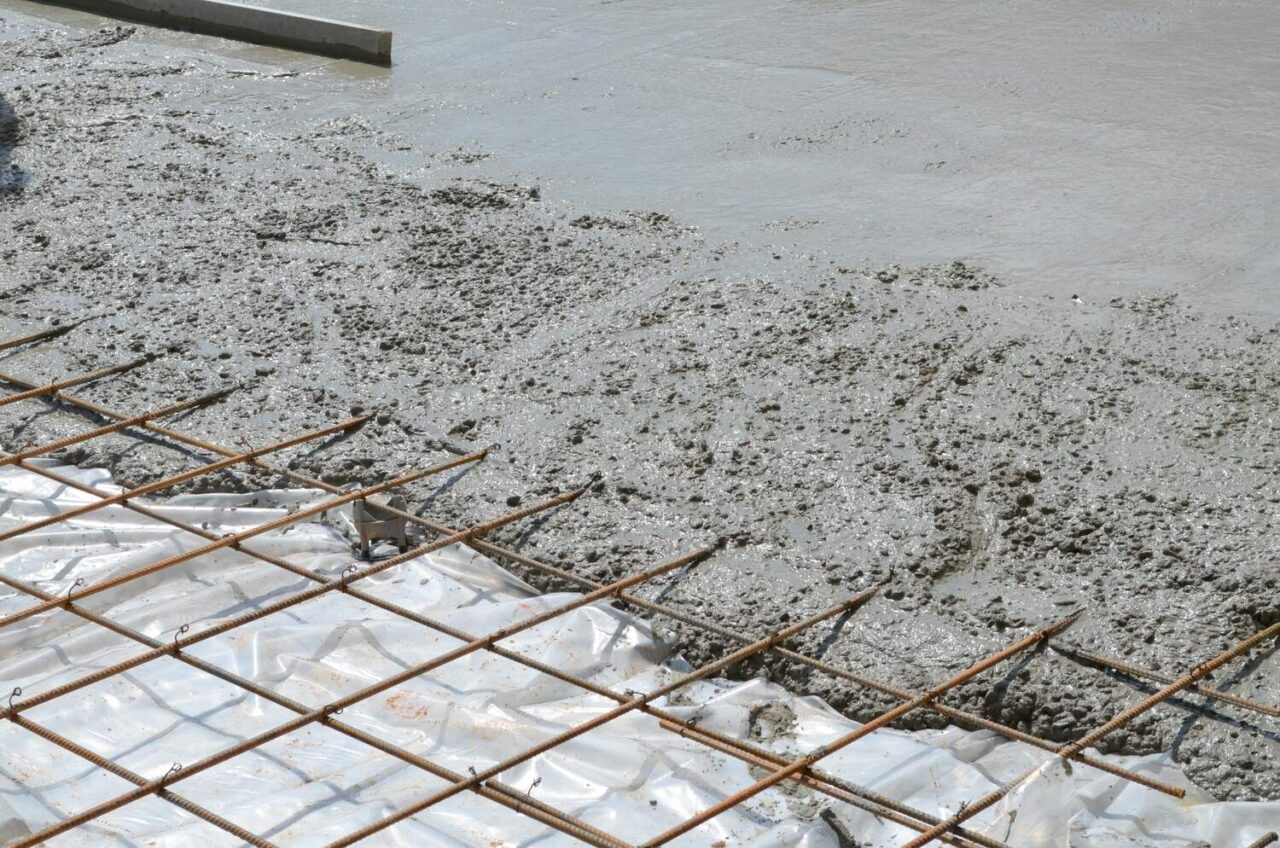
Reinforcement helps control cracking and maintain structural integrity through Minnesota’s challenging freeze-thaw cycles. Many contractors include basic reinforcement in their base pricing, but not always. If reinforcement is listed as an add-on or if you want to upgrade beyond basic wire mesh, common costs include:
- Wire mesh installed: Often around $1 to $1.25 per sq ft
- Rebar installed: Often around $1.50 to $2 per sq ft, depending on spacing and layout
For a 640-square-foot driveway, upgrading to rebar reinforcement adds approximately $960 to $1,280.
Some contractors offer fiber reinforcement as an alternative or supplement to traditional steel reinforcement. Synthetic fibers mixed into the concrete help control shrinkage cracking, typically adding $0.50 to $1 per sq ft. However, fiber reinforcement doesn’t replace the structural benefits of rebar for larger driveways or heavy load applications. Ask your contractor what specific problem they’re solving with fiber and whether it’s the right choice for your project.
Cold Weather Placement and Protection
Late fall and early winter concrete work requires special techniques to ensure proper curing when temperatures drop. These cold weather methods add cost but allow quality installations outside the peak summer season.
Typical add-on: 10 to 30 percent of the base installation cost
Cold weather techniques include accelerating admixtures that speed the curing process, heated water in the concrete mix, insulated blankets to trap heat during curing, heated enclosures for extreme cold, and extended protection periods with temperature monitoring. The percentage increase depends on how cold conditions are and how much protection your project requires.
For a $7,000 base installation, cold weather protection might add $700 to $2,100. However, some contractors offer off-season discounts that partially offset these additional costs, making late fall installations more competitively priced than you might expect.
Permits, Right-of-Way, and Bonds
Minnesota municipalities have varying permit requirements for driveway installation. Some cities require permits for all new driveways and replacements, while others only require permits when crossing right-of-way areas, changing driveway width, or modifying drainage patterns.
- Typical permit fees: Often $50 to $200
- Right-of-way permits: May require additional fees or deposits
- Performance bonds: Some municipalities require bonds for right-of-way work, which are refundable after final inspection (this is really only required for larger public works projects)
Professional contractors experienced in your area handle permit applications as part of their service. Verify whether permit costs are included in your estimate or if they’re an additional expense you’ll need to budget for separately.
Concrete Driveway Cost Examples
Let’s walk through actual cost scenarios for a standard two-car driveway to demonstrate how base pricing and add-ons combine.
Example: Standard Two-Car Driveway (16′ × 40′ = 640 sq ft)
Base Pricing Only (Same Scope, Different Finish)
- Plain broom finish: $8 to $12 per sq ft = $5,100 to $7,700
- Light decorative: $12 to $15 per sq ft = $7,700 to $9,600
- Stamped or decorative: $15 to $18 per sq ft = $9,600 to $11,500
- Premium custom: $18 to $25+ per sq ft = $11,500 to $16,000+
Then Add Your Site Conditions and Upgrades (Examples)
- Remove old driveway: + $640 to $2,560
- Heavy grading and drainage work: + $1,280 to $2,560
- Upgrade to rebar reinforcement: + $960 to $1,280
- Cold weather protection: + 10 to 30% ($700 to $2,100 on a $7,000 base)
- Permits and fees: + $50 to $200
This is why the same 640-square-foot driveway might cost $6,000 for one homeowner with an easy site and summer installation, while another homeowner replacing an old driveway on challenging terrain in November might pay $14,000, even before choosing decorative finishes.
Scenario Specific Comparisons
To help give you the best idea of what to expect, here are some scenario specific examples.
Scenario A: Simple Replacement, Summer Install
- 640 sq ft, plain broom finish: $6,400 base
- Remove old asphalt: + $640
- Standard site prep: included
- Summer installation: no premium
- Total: $7,040
Scenario B: First Driveway, Challenging Site
- 640 sq ft, plain broom finish: $7,200 base
- No demolition: $0
- Heavy grading for drainage: + $2,000
- Poor soil requires extra base depth: + $800
- Total: $10,000
Scenario C: Upgrade with Winter Installation
- 640 sq ft, stamped concrete: $10,000 base
- Remove old concrete: + $2,000
- Rebar reinforcement: + $1,100
- November installation with protection: + $1,500
- Total: $14,600
These scenarios demonstrate that site conditions and timing often impact total cost more than the difference between standard and decorative finishes.
Common Driveway Sizes with Base Pricing Ranges
These estimates show base installed pricing only. Add-ons for your specific site come after these figures.
Single-Car Driveway (12′ × 24′ = 288 sq ft)
- Plain broom finish: $2,300 to $3,500
- Light decorative: $3,500 to $4,300
- Stamped: $4,300 to $5,200
- Premium custom: $5,200 to $7,200
Standard Two-Car (16′ × 40′ = 640 sq ft)
- Plain broom finish: $5,100 to $7,700
- Light decorative: $7,700 to $9,600
- Stamped: $9,600 to $11,500
- Premium custom: $11,500 to $16,000
Wider Two-Car (20′ × 40′ = 800 sq ft)
- Plain broom finish: $6,400 to $9,600
- Light decorative: $9,600 to $12,000
- Stamped: $12,000 to $14,400
- Premium custom: $14,400 to $20,000
Large Two-Car with Turnaround (24′ × 44′ = 1,056 sq ft)
- Plain broom finish: $8,400 to $12,700
- Light decorative: $12,700 to $15,800
- Stamped: $15,800 to $19,000
- Premium custom: $19,000 to $26,400
Remember, these are base ranges. Your actual investment will reflect your specific site conditions, required upgrades, and project timing.
Common Minnesota-Specific Challenges that Will Affect Cost
A concrete driveway in Minnesota isn’t just a slab of concrete. It’s an engineered system designed to handle our state’s unique challenges: extreme freeze-thaw cycles, heavy spring runoff, salt and de-icer exposure, and soil movement from frost heaving.
A quality contractor will keep these challenges in mind when submitting bids. If you stumble upon a contractor who bids significantly lower than others, it’s best to ask a few questions before moving forward.
A Stable, Well-Compacted Base
The base beneath your concrete is arguably more important than the concrete itself. Minnesota’s freeze-thaw cycles cause soil expansion and contraction that can crack poorly supported concrete. A proper base of 4 to 6 inches of compacted crushed stone provides stability and drainage, preventing the settlement and cracking that plague driveways built on inadequate bases.
Drainage Planning
Water is concrete’s enemy in Minnesota. Proper drainage ensures water flows away from your driveway and doesn’t pool on the surface where it can freeze, expand, and cause damage. Your contractor should plan for appropriate slope (typically 1/4 inch per foot minimum), consider how spring runoff will flow around your driveway, and ensure water doesn’t drain toward your home or garage.
Durable Exterior Mix Design
Not all concrete is created equal. Minnesota driveways should use air-entrained concrete that contains microscopic air bubbles designed to accommodate freeze-thaw expansion. The concrete should also meet appropriate strength specifications, typically 4,000 PSI or higher for driveways, and include proper cement content for de-icer resistance. These specifications cost more than basic 2,500 PSI concrete used for less demanding applications, but they’re essential for long-term performance.
Proper Joint Layout to Control Cracking
All concrete cracks eventually, but strategic control joints determine where those cracks occur. Joints are planned cuts or tooled grooves that create intentional weak points, directing cracks along predetermined lines rather than randomly across your driveway. Proper joint spacing (typically no more than 10 to 12 feet apart) and layout prevent the unsightly random cracking that signals poor planning or installation.
If a bid is dramatically cheaper than others you’ve received, ask where they’re saving money. Most “cheap driveway problems” start with inadequate base preparation, substandard concrete mixes, or rushed curing processes that compromise long-term durability.
Beyond Installation: Long-Term Ownership Costs
When evaluating concrete driveway cost, consider the total cost of ownership over the driveway’s lifespan, not just the initial installation expense.
Maintenance and Sealing
Concrete driveways require relatively minimal maintenance compared to alternatives like asphalt, but regular care extends lifespan and maintains appearance.
Sealing: Professional sealing every 3 to 5 years costs $0.75 to $1.50 per sq ft. For a 640-square-foot driveway, expect to pay $480 to $960 per application. Sealing protects against moisture penetration, salt damage, oil staining, and surface deterioration while making the driveway easier to clean. DIY sealing reduces costs to $0.15 to $0.35 per sq ft for materials, though proper surface preparation and application technique are essential for effective results. You can learn more about how to seal a concrete driveway here.
Cleaning: Annual or semi-annual pressure washing removes dirt, oil stains, tire marks, and organic growth. Professional cleaning costs $0.25 to $0.50 per sq ft, while renting a pressure washer for DIY cleaning runs $60 to $90 per day. Regular cleaning prevents stain penetration and maintains your driveway’s appearance.
Winter De-icing: Minnesota’s long winters necessitate ice control, but traditional rock salt (sodium chloride) can damage concrete surfaces over time, particularly if the concrete wasn’t properly cured or lacks adequate air entrainment. Calcium chloride or magnesium chloride de-icers are gentler alternatives. Budget $40 to $100 per winter for de-icing materials, depending on driveway size and winter severity. Minimize de-icer use by shoveling promptly after snowfall and using sand for traction when possible.
Repair Costs Over Time
Even well-maintained driveways eventually require repairs. These tasks are normally quick and DIY friendly, but you can always go the professional route to avoid the headache.
Crack Filling: Minor hairline cracks are normal in concrete and easily addressed before they become larger problems. DIY crack filler costs $5 to $15 per tube, covering approximately 10 to 15 linear feet of hairline cracks. Professional crack sealing for an average driveway with minor cracking costs $100 to $300. Addressing cracks promptly prevents water infiltration that can lead to more serious damage through freeze-thaw expansion.
Surface Patching: Small spalled areas (where the surface layer has flaked away) or surface damage can be patched for $200 to $500 per damaged area, depending on size and extent.
Extensive spalling across large areas may require professional resurfacing at $4 to $8 per sq ft (this is essentially another concrete layer poured on top of your current driveway). For a full-driveway resurface of 640 square feet, expect to pay between $2,500 and $5,100.
Slab Leveling: If sections of your driveway sink or settle due to soil erosion or poor compaction beneath the concrete, modern mudjacking or polyurethane foam injection techniques lift and level sunken concrete at a fraction of replacement cost. Leveling costs $800 to $2,500 depending on the extent of settling, number of slabs affected, and the method used (traditional mudjacking is typically less expensive than foam injection but more invasive). This repair option extends your driveway’s life by decades when the concrete’s structural integrity remains sound but settling has created trip hazards or drainage problems. Not recommended for DIY.
How to Compare Contractor Bids Without Getting Burned
When you receive multiple quotes for your concrete driveway, the prices will likely vary significantly. However, you can’t make an informed decision based on the bottom-line number alone. The lowest bid might exclude critical elements or cut corners that lead to premature failure, while the highest bid might include unnecessary upgrades or premium pricing.
Essential Questions to Ask Every Contractor
These are a few important questions to ask each contractor you are considering working with. While some of these are a bit on the excessive side, they will never hurt to ask!
About the Concrete Contractor:
- How long have you been in business?
- Where are you located?
- Do you hire out projects to sub-contractors?
- Who will be supervising the project?
- Can you provide references from recent projects?
- How is payment handled?
About the Concrete Itself:
- What concrete strength (PSI) will you use? (Look for 4,000 PSI or higher)
- Will the concrete be air-entrained? (Essential for Minnesota’s freeze-thaw cycles)
- What thickness are you pouring, and where? (Standard is 4 inches, but verify)
- Is the mix design specifically formulated for exterior use and de-icer resistance?
About Reinforcement:
- What type of reinforcement is included? (Wire mesh, rebar, or fiber?)
- How is the reinforcement positioned and supported during the pour?
- Is reinforcement included in the base price or an add-on?
About Base Preparation:
- How deep will you excavate?
- What base material will you use, and how thick will the base layer be?
- How will you compact the base, and what equipment will you use?
- How will you address soft spots or poor soil if discovered during excavation?
About Installation Details:
- How are control joints laid out? (Spacing, pattern, and depth)
- What’s your plan for proper drainage and slope?
- What finishing techniques will you use?
- How long will you protect and cure the concrete?
- What weather conditions would cause you to postpone the pour?
About Project Scope:
- Is demolition and disposal of the existing driveway included?
- Are permits and right-of-way work included, or are they additional?
- Who handles permit applications and inspections?
- What’s included in site cleanup?
- Are there any potential additional costs I should be aware of?
About Timeline and Warranty:
- What’s the realistic timeline from start to completion?
- How will weather delays be handled?
- What warranty do you provide, and what does it cover?
- Do you carry liability insurance and workers’ compensation?
Red Flags that Should Concern You
- Bids significantly lower than others without clear explanation of cost savings
- Vague specifications without details about thickness, reinforcement, or base depth
- Pressure to sign immediately or “today only” pricing
- No written contract or warranty
- Inability or unwillingness to pull required permits
- Cash-only payment terms or requests for large deposits upfront
- No local references or established business location
- Unwillingness to answer detailed technical questions
What a Quality Bid Should Include
A professional, detailed bid should clearly specify:
- Total square footage being installed
- Concrete specifications (PSI, air entrainment, thickness)
- Reinforcement type and specifications
- Base preparation details (depth, material, compaction method)
- Finish type and any decorative elements
- Demolition scope if applicable
- Grading and drainage work included
- Control joint layout plan
- Curing and protection procedures
- Timeline with realistic weather contingencies
- Payment schedule tied to project milestones
- Warranty terms and coverage
- Permit responsibility and costs
- Insurance certificates
A Simple Way to Estimate the Cost of a Concrete Driveway
Rather than trying to calculate an exact cost before contacting contractors, use this process to develop a realistic budget range:
Step 1: Measure Your Driveway
Calculate the square footage you need. Add 10 to 15 percent if your driveway has curves or irregular shapes to account for waste and form work.
Step 2: Choose Your Finish Tier
Decide which finish level matches your priorities and style preferences:
- Plain broom finish: $8 to $12 per sq ft base
- Light decorative: $12 to $15 per sq ft base
- Stamped/decorative: $15 to $18 per sq ft base
- Premium custom: $18 to $25+ per sq ft base
Step 3: Estimate Your Add-Ons
Be realistic about your site conditions:
- Removing old driveway? Add $1 to $4 per sq ft
- Challenging terrain or drainage issues? Add $1 to $6 per sq ft
- Need thicker concrete? Add 20 to 50 percent to material cost
- Want upgraded reinforcement? Add $1 to $2 per sq ft
- Installing in late fall or winter? Add 10 to 30 percent
Step 4: Calculate Your Range
Multiply your square footage by your finish tier cost, then add your estimated add-ons. This gives you a realistic budget range before contacting contractors.
Step 5: Keep a Contingency
Add 10 to 15 percent contingency for unknowns that might be discovered during excavation, such as buried utilities requiring relocation, worse drainage than expected, or soft spots in the subgrade requiring additional base depth.
Example Budget Calculation
640 sq ft two-car driveway, stamped finish, replacing old concrete, normal site conditions:
- Base stamped concrete: 640 sq ft × $16 = $10,240
- Remove old concrete: 640 sq ft × $2.50 = $1,600
- Rebar reinforcement upgrade: 640 sq ft × $1.75 = $1,120
- Subtotal: $12,960
- Contingency (10%): $1,296
- Budget range: $12,960 to $14,256
This homeowner should expect bids in the $12,000 to $15,000 range and should be cautious of outliers. Taking the time to talk with each contractor and have them walk you through their quote can help solidify whether they are the right choice.
Potential Ways to Reduce Cost
While you shouldn’t compromise on essential quality elements, there are several ways you can reduce costs without sacrificing long-term performance.
Timing Your Project Strategically
Off-Season Consideration: Some contractors reduce prices during slower periods in late fall or early spring to maintain steady work. While cold weather installation adds costs for protection, negotiated rates might offset these premiums. However, only work with contractors who use proper cold-weather techniques and don’t rush the job to beat the approaching winter.
Flexible Scheduling: Being flexible with your project start date allows contractors to schedule your job during gaps in their calendar, potentially reducing costs. Fixed timing around specific events (like needing it done before a wedding or graduation party) may incur rush charges.
Right-Sizing Your Project
Evaluate Actual Needs: Do you truly need the maximum driveway width, or would 18 feet serve just as well as 20 feet? Could you accept a decorative boarder instead of a full stamped concrete driveway? Some concessions can lead to hundreds or even thousands of dollars saved while still providing adequate functionality.
Phased Installation: If budget is tight, consider installing a basic driveway now and adding decorative borders, stamped aprons, or colored accents in a year or two as funds allow. This approach lets you spread costs over time while still getting a functional driveway immediately.
Material and Finish Decisions
Standard Finishes Perform Excellently: Plain broom-finish concrete provides better durability and lifespan than decorative options. If budget is limited, invest in quality base preparation and proper installation rather than decorative finishes. You can always add acid staining or other surface treatments later.
Strategic Decorative Use: Instead of stamping or coloring the entire driveway, consider decorative elements in high-visibility areas like the apron near the garage or borders along edges, with standard concrete for the main area. This approach provides a similar style at a fraction of the cost.
DIY Opportunities (With Caution)
What You Might Handle: If you’re capable and have time, you could potentially handle old driveway removal (if asphalt rather than concrete), site cleanup after installation, or post-installation sealing. However, consult with your contractor about which tasks you can safely handle without interfering with their work or warranty.
What You Should Never DIY: Base preparation, concrete placement, finishing, and curing require professional expertise and equipment. Attempting these tasks yourself will almost certainly result in a poor-quality driveway that fails prematurely. The savings aren’t worth the risk.
Why Professional Installation Matters More Than Price
While we’ve discussed costs extensively throughout this guide, the most expensive driveway isn’t the one with the highest installation cost. It’s the one that fails prematurely, requiring expensive repairs or complete replacement within 10 years instead of lasting 30 to 50 years as a properly installed concrete driveway should.
Minnesota’s climate is unforgiving to poorly installed concrete. A driveway installed without adequate base preparation will crack and settle. Concrete poured without proper air entrainment will spall and deteriorate from freeze-thaw cycles. A driveway without appropriate drainage will accumulate water that accelerates deterioration. Concrete finished too quickly or cured improperly will never reach its designed strength.
These are not theoretical concerns. Drive through any Minnesota neighborhood and you’ll see the results: driveways less than 10 years old already showing extensive cracking, settlement, spalling, and deterioration. In most cases, these problems stem from installation shortcuts, not material defects.
Professional installation by experienced concrete driveway contractors costs more initially, but it’s the foundation for a driveway that will serve your home reliably for decades. When evaluating bids, consider not just the price but the contractor’s experience, reputation, warranty, and commitment to doing the job right rather than doing it quickly or cheaply.
If you would like to learn more about concrete driveways, you can check out our homeowners concrete driveway guide here.
How Our Team at Kali Concrete Can Help
We’ve covered concrete driveway costs in detail because informed homeowners make better decisions and end up with better results. At Kali Concrete, our goal is to be your trusted resource for everything concrete related. We believe that when homeowners understand what they’re paying for and why, they can move forward with their decision confidently and become some of our most satisfied customers.
We’ve served the Belle Plaine area and surrounding communities for over 40 years. During that time we’ve built a team of experienced local concrete professionals and installed thousands of driveways. We’ve learned which base preparation techniques prevent settling, how to detail drainage for heavy spring runoff, which concrete mixes provide the best freeze-thaw resistance, and how to finish concrete so it looks beautiful on installation day and still looks great decades later. Heck, our owner is at every single site to make sure each project is done right.
If you’re looking for an experienced concrete contractor you can trust, call our team at Kali Concrete. We would love the chance to work with you.