
Choosing a concrete contractor for your Twin Cities home involves more than comparing prices. A useful estimate should help you understand how the proposed work addresses the actual conditions on your property, including preparation, drainage, materials, access, concrete placement, finishing, curing, and cleanup.
Whether you are replacing a driveway, adding a patio, updating a walkway, or improving an entry, the project should be planned around how the area will be used and the conditions surrounding it.
At Kali Concrete, our family-owned business brings more than 40 years of concrete paving tradition to the Minneapolis and St. Paul area. We encourage homeowners to ask specific questions during the estimate so they can compare the proposed work rather than looking only at the final price.
Start With the Conditions on Your Property
Every concrete project begins with the site.
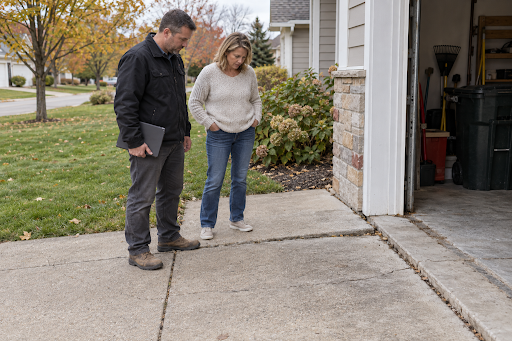
Explain how you currently use the area and what you want to improve. If you’re replacing existing concrete, point out cracking, settlement, uneven sections, drainage concerns, or other conditions that led you to consider replacement.
Water deserves particular attention. Show the contractor where water tends to collect after rain or snowmelt and whether runoff moves toward the house, garage, neighboring surfaces, or landscaping.
Existing grades, structures, landscaping, access points, and adjoining pavement can all affect how the project is approached.
A contractor should be able to explain what can reasonably be evaluated during the estimate and what conditions may remain unknown until the existing concrete is removed.
Discuss How the Concrete Will Be Used
A driveway and a backyard patio don’t perform the same job.
For a driveway, discuss vehicle use, the garage connection, adjoining pavement, drainage, and how you’ll access the property while work is underway. If heavier vehicles regularly use the area, mention that during the estimate.
Patios, walkways, stoops, and other pedestrian areas have different considerations. Think about how people move through the space, where the concrete connects with doors or steps, and how the finished area will interact with landscaping and outdoor living features.
Explaining the intended use gives the contractor a better basis for discussing the project than simply providing dimensions.
Ask About Removal and Site Preparation
If existing concrete needs to be removed, ask how demolition and disposal are addressed in the proposal.
Removal may also reveal conditions that weren’t visible during the original estimate. Ask what happens if unexpected conditions are discovered and how any necessary changes to the scope or price will be communicated.
Preparation beneath the new concrete is another important part of the conversation.
You don’t need to determine the technical specifications yourself, but you should understand what preparation is included and why the proposed approach is appropriate for the project.
When comparing contractors, make sure you’re comparing similar scopes. One estimate may include work that another estimate leaves unclear or excludes entirely.
Talk About Drainage Before Placement
Drainage shouldn’t become a conversation only after new concrete has been installed.
Discuss existing water patterns and the intended drainage approach during the estimate. Nearby structures, garage floors, adjoining pavement, landscaping, and existing grades can all affect the project.
If the existing concrete currently holds water or directs it somewhere you don’t want it to go, make sure that concern is documented.
A new surface may improve an area, but the contractor should distinguish what the concrete work is intended to address from drainage or site conditions that may require additional consideration.
Understand the Proposed Concrete Scope
Ask for a written description of what the proposed project includes.
Depending on the job, that may address removal, disposal, supporting-base preparation, concrete placement, joints, finish, curing procedures, cleanup, and restoration of areas affected by access.
If decorative or specialty finishes are being considered, clarify exactly what is included.
The written scope gives you something concrete to compare between proposals and provides a reference if questions arise later.
Avoid relying on assumptions about work that isn’t actually described.
Ask About Joints and Finishing
The finished appearance matters, but there are several decisions behind that appearance.
Ask how joints will be addressed and what finish is proposed for the surface. Different applications may have different practical and appearance considerations.
If you have a particular look in mind, bring photographs or examples to the estimate. Make sure you and the contractor are discussing the same general result before work begins.
Also ask how transitions to existing concrete, pavement, steps, garage slabs, or other surfaces will be handled within the project scope.
Plan for Minnesota Weather
Twin Cities concrete projects have to work around Minnesota conditions.
Weather can affect scheduling, placement, finishing, and curing. A projected start date should therefore be discussed as part of a larger project window rather than treated as though weather and site conditions cannot change.
Ask what conditions could delay the work and how schedule changes will be communicated.
If you’re coordinating the project with landscaping, another contractor, travel, or a particular event, share those timing requirements during the estimate.
Building some flexibility into the schedule can make unexpected weather changes easier to manage.
Understand Access During the Project
Concrete work may temporarily change how you use your property.
For driveway replacement, ask how long vehicle access will be affected and where vehicles should be parked during the project.
For patios, walkways, or entry work, determine whether another route into the home will be necessary.
The contractor may also need access for equipment and material delivery. Discuss gates, fences, landscaping, neighboring property, overhead restrictions, parked vehicles, or anything else that could affect access.
Clarify how lawn, landscaping, and other nearby surfaces within the access area will be handled.
Ask About Curing and Return to Service
Fresh concrete may look finished before it is ready for normal use.
Ask for project-specific instructions about when walking, driving, furniture placement, and other loading can resume. Don’t assume that a surface is ready simply because it looks dry.
Curing and care instructions should be part of the project handoff so you know what is expected after the crew leaves.
For work completed near the colder parts of the season, also ask about appropriate winter care for the new concrete.
Review Project Terms in Writing
Before choosing a contractor, review the available workmanship and product terms.
Ask what is covered, what is excluded, what maintenance or care responsibilities belong to you, and how you should report a concern after the project.
General statements about quality aren’t a substitute for understanding the actual terms associated with your project.
You should also know how changes are handled. If removal reveals an unexpected condition or you decide to modify the project, ask how changes to cost and scope will be documented and approved.
Compare More Than the Bottom-Line Price
Price matters, but two estimates with similar totals may describe very different projects. Likewise, a lower estimate may not include the same preparation, removal, access work, finishing, cleanup, or other services as another proposal.
Compare the actual scope line by line.
Look for unclear responsibilities and ask questions before choosing. A missing preparation item or misunderstanding about access can matter more than a relatively small difference between prices.
A useful proposal should help you understand both the intended result and the process for getting there.
Bring These Questions to Your Concrete Estimate
Consider asking:
- What existing site conditions affect your recommendation?
- What removal and preparation are included?
- How will drainage and existing grades be considered?
- What concrete placement and finish are proposed?
- How will joints be addressed?
- What access will the crew and equipment require?
- Who coordinates any project-specific approvals?
- What happens if removal reveals unexpected conditions?
- How will changes to scope, cost, or timing be approved?
- When can the concrete safely return to normal use?
- What care instructions will I receive?
- What workmanship or product terms apply to the project?
Getting clear answers makes it easier to compare contractors based on the work being proposed rather than price alone.
Request a Quote From Kali Concrete
Choosing a concrete contractor for your Twin Cities home should give you confidence in both the proposed result and the process used to reach it.
Kali Concrete is a family-owned company serving Minneapolis, St. Paul, and the surrounding Twin Cities metro area, backed by more than 40 years of concrete paving tradition.
Call 612-247-2565 or request a quote for your driveway, patio, stoop, walkway, or other concrete project. Tell us what you want to improve, share any drainage or access concerns you’ve noticed, and we’ll discuss the site, project options, and proposed scope with you.